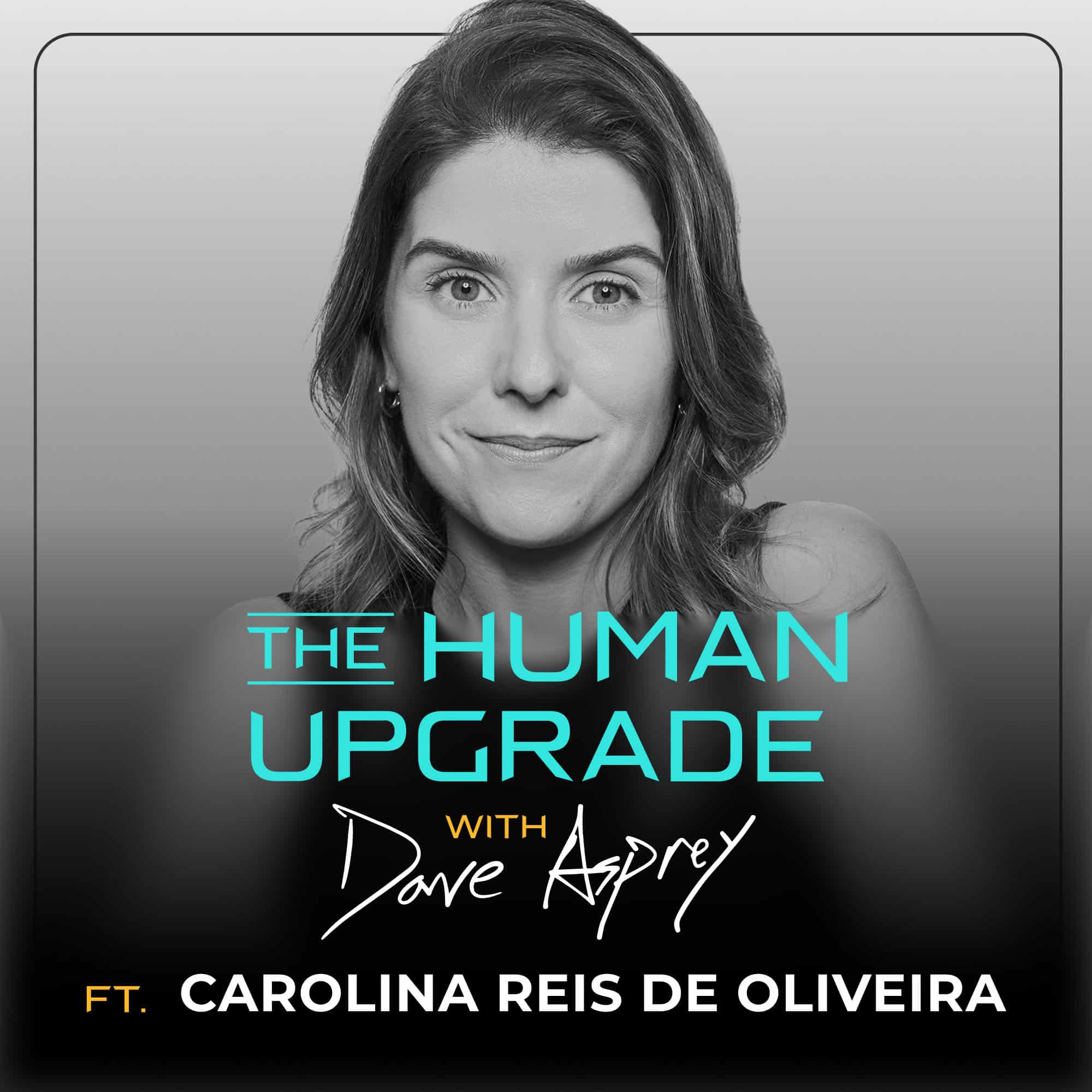
Host Dave Asprey sits down with Carolina Reis de Oliveira, PhD, CEO and co-founder of OneSkin, to break down why your skin can be biologically older than you are, why menopause can rapidly accelerate dryness, thinning, and crepey skin, how declining estrogen affects collagen, ceramides, cholesterol, hyaluronic acid, and the skin barrier, why simply sealing moisture into the skin with occlusive products does not fix the underlying biology, how senescent “zombie” cells drive inflammation and tissue breakdown, how Carolina’s team screened hundreds of peptides to develop OS-01, and why their research found a 2.5-year reduction in measured biological skin age. They also explore why the skin around your eyes may be 25 to 30 years older than the skin on your cheeks, why topical collagen does not work the way most people think, how collagen amino acids can still support hydration, why cholesterol is essential for healthy skin, what happens to skin after major weight loss and GLP-1 use, why some GHK-Cu peptide products may not perform as expected, how over-moisturizing and “slugging” can disrupt the skin barrier, how biological skin age is measured with epigenetic clocks like MoClock, why compromised skin may contribute to systemic inflammation, and new clinical and laboratory data on OneSkin’s OS-01 Rich moisturizer showing improvements in hydration, firmness, fine lines, wrinkles, collagen, hyaluronic acid, and elastin. Essential listening for anyone serious about skin longevity, menopause, peptides, biological age, collagen, inflammation, GLP-1 weight loss, and maintaining healthier, younger-functioning skin as you age.
Your skin is likely biologically older than you are, but new research suggests some of that aging may be reversible.
For Dave’s listeners only, visit oneskin.co/Dave for exclusive early access to the OS-01 Face Rich Cream!
Host Dave Asprey sits down with Carolina Reis de Oliveira, PhD, CEO and co-founder of OneSkin. Carolina holds a PhD in stem cell biology and tissue engineering, is a co-inventor of five patents, and has co-authored numerous scientific publications. She and her team are studying skin longevity by targeting one of the central drivers of aging: the accumulation of senescent cells.
They break down why skin loses its ability to hold water as you age, and why that process can accelerate dramatically during perimenopause and menopause. Carolina explains the skin’s “brick and mortar” barrier system, how declining estrogen affects collagen, ceramides, cholesterol, hyaluronic acid, and elastin, and why simply sealing moisture into your skin with occlusive products does not solve the underlying biology. They also explore why GLP-1 users can experience loose or sagging skin after rapid weight loss and what may help preserve skin structure over time.
Carolina reveals how her team screened hundreds of peptides to develop OS-01, a senomorphic peptide designed to reduce the damaging signals produced by senescent “zombie” cells while supporting healthier skin function. In their research, OS-01 reduced markers of cellular senescence and inflammation, increased collagen production, and was associated with a 2.5-year reduction in measured biological skin age. She also explains why more peptides are not necessarily better, why some GHK-Cu formulations may fail to perform, and why peptide stability, concentration, delivery, and formulation matter.
The conversation also covers why the skin around your eyes may biologically age decades faster than your cheeks, whether topical collagen really works, why cholesterol is essential for a healthy skin barrier, how over-moisturizing and “slugging” can backfire, and how damaged skin may contribute to systemic inflammation. Carolina also shares clinical data on OneSkin’s new OS-01 Rich moisturizer, including improvements in hydration, firmness, fine lines, wrinkles, collagen, hyaluronic acid, and elastin.
This is essential listening for anyone serious about skin longevity, anti-aging, menopause, GLP-1 weight loss, collagen, senescent cells, peptides, biological age testing, inflammation, hydration, hair and skin health, and maintaining younger-looking skin as you age.
You’ll Learn:
-Why menopause can rapidly accelerate dry, thin, and crepey skin
-How your skin’s natural barrier holds water and why it breaks down with age
-Why GLP-1 weight loss can make loose and sagging skin more noticeable
-How senescent “zombie” cells accelerate inflammation and collagen loss
-How OS-01 was associated with a 2.5-year reduction in biological skin age
-Why skin around your eyes may be biologically much older than skin on your cheeks
-Why topical collagen is different from collagen amino acids and collagen-producing signals
-How cholesterol, ceramides, fatty acids, and hyaluronic acid support skin hydration
-Why some GHK-Cu peptide products may not perform as expected
-How over-moisturizing, face masks, Vaseline, and “slugging” can disrupt the skin barrier
-How scientists measure the biological age of skin with epigenetic clocks
-Why healthier skin may help lower inflammation throughout the body
Keywords: Carolina Reis de Oliveira, OneSkin, OS-01, skin longevity, skin biological age, skin age reversal, senescent cells, zombie cells, menopause skin, perimenopause skin, GLP-1 weight loss, loose skin, crepey skin, skin hydration, skin barrier, collagen production, hyaluronic acid, elastin, ceramides, cholesterol skin, GHK-Cu, copper peptide, peptides, epigenetic skin clock, MoClock, fine lines, wrinkles, skin firmness, slugging, topical collagen
Resources:
00:00 – Trailer
A quick preview of the episode’s biggest hooks, from surgically removed objects to the surprising science of your poop.
00:55 – Meet Dr. Karan Rajan
Dr. Karan Rajan, NHS gut surgeon and 12 million follower health educator, joins the show to talk about his path from removing colon cancers to becoming obsessed with the microbiome.
04:04 – Kellogg’s History & Farts
The disturbing history of Dr. Kellogg’s anti-libido cornflakes and enema obsession leads into why more than 70 percent of your farts are actually produced by bacteria, not you.
11:53 – Throne Poop Tracking
Dr. Rajan explains how Throne’s camera and sonography system tracks Bristol stool scale, toilet time, urine flow, and hydration to catch deviations from your personal baseline.
19:35 – Poop Colors & Wild Stories
What black, red, green, and white poop actually signal about bleeding, infection, and bile flow, followed by the strangest objects Dr. Rajan has surgically removed from patients, including a shower head that perforated a man’s colon.
28:02 – Worst Foods & Saturated Fat
Why the real danger to gut health is a dietary pattern low in fiber and high in saturated fat and salt, and a debate over whether all saturated fats, including ghee, deserve the same reputation.
36:26 – Fiber Fermentation Geography
Dr. Rajan introduces fermentation geography, mapping how fast, medium, and slow fermenting fibers feed different bacteria across the colon, and why inulin supplements can cause serious bloating.
46:57 – Sodium & Salt Myths
A deep dive into research showing low sodium can be more dangerous than high sodium for most people, and why the sodium to potassium ratio matters more than salt intake alone.
59:03 – Keto, Carnivore & Fasting
Both guests share their personal histories with keto and carnivore diets, the health issues that led them back to fiber, and how fasting triggers the gut’s natural cleaning cycle.
01:04:45 – AI, Misinformation & Closing
A conversation on where AI is headed in personalized health data, the risks of training models on unreliable research, and closing thoughts on staying open to changing your mind.
Thank you to our sponsors!
– Butcher Box | Go to ButcherBox.com/HUMANUPGRADE to get $20 off your first box, plus your choice of free ground beef for life, or free chicken thigh
– Download Dave’s Free Peptide Guide at daveasprey.com/peptide-guide.
– Caldera + Lab | Go to calroy.com/dave for the research, a discount, and a 45-day money back guarantee.
– Kenetik | Instead of pushing your system harder, Kenetik feeds your brain the ketones it craves to fuel calm clarity and steady focus. Go to drinkkenetik.com/DAVE and use code DAVE for a discount.
“Follow” or “subscribe” to The Human Upgrade™ with Dave Asprey on your favorite podcast platform.
Go to Apple Podcasts at daveasprey.com/apple and leave a (hopefully) 5-star rating and a creative review.
Got a comment, idea or question for the podcast? Submit via this form!
Follow @thehumanupgradepodcast on Instagram and Facebook.
Learn directly from Dave Asprey alongside others in a membership group: ourupgradecollective.com.

Smarter Not Harder: The Biohacker’s Guide to Getting the Body and Mind You Want is about helping you to become the best version of yourself by embracing laziness while increasing your energy and optimizing your biology.
Receive weekly biohacking tips and tech by becoming a Dave Asprey insider.