Paige Klingerman

The Light Stack: How Your Light Environment Controls More Than You Think

Your body runs on light. Most people spend their days indoors under fluorescent and LED lights, then wonder why they feel sleepy and reach for sugar at 3 pm.

Light is a biological input. It shapes your hormones, your sleep, and your circadian rhythm more than almost anything else you do. Once you understand how it works, the fixes get simple, and most of them cost very little.

What Real Sun Exposure Does for You

When sunlight hits your body, it delivers three things your biology depends on.

Vitamin D From UV

UV triggers vitamin D synthesis in your skin. Vitamin D supports hormones, immunity, bone health, and more.

Mitochondrial Support From Infrared

Infrared light penetrates tissue, stimulates mitochondrial function, and lowers inflammation.

Circadian Timing Through Your Eyes

Morning light enters your eyes and tells your brain what time it is. That single signal sets your cortisol, your energy, and your melatonin timing for the entire day.

Why You May Be Light Deficient

Your day probably starts with your phone six inches from your face. You commute behind glass that filters UV, sit under fluorescent or LED lights for eight hours, and watch a screen until you fall asleep.

Artificial light runs heavy in blue wavelengths, and blue light tells your brain it’s midday whatever the clock says. Run that signal all day and into the night, and your cortisol, melatonin, and sleep rhythm never get the right cues. Your circadian system never fully calibrates, and the effects show up everywhere: poor sleep, low energy, imbalanced hormones, low mood, and blood sugar swings.

You can fix this.

Build Your Light Stack

Four steps set up your daily light for better energy, sleep, and performance.

Get morning sun. Spend 10 to 20 minutes outside within an hour of waking. Skip the sunglasses and contacts, and keep glass out of the way. It costs nothing, and cloudy days still deliver benefits.

Fix your indoor light environment. Standard LEDs run blue-heavy and work against your biology all day. Health Lighting’s Chromalux full spectrum bulbs are a great alternative. In the evening, add dimmer switches and red bulbs to create the warm, low-light conditions that let melatonin rise. Blackout curtains keep your bedroom fully dark, which matters for high-quality sleep.

Block junk light at night. After sunset, blue, green, and violet wavelengths tell your brain it’s still noon. TrueDark glasses filter those wavelengths, which matters most when you work on a computer or phone at night. Use code DAVEASPREY15 for 15% off. To filter light at the source, the Bodyguardz Red Light Converter screen protector turns the blue light from your phone into red light.

Add red light. Sunlight contains red and near-infrared wavelengths that penetrate your skin and reach your mitochondria. That supports ATP production (your body’s energy currency), lower inflammation, faster tissue recovery, and better cellular function. Red light therapy delivers concentrated red and near-infrared wavelengths in a targeted dose, separate from your daily sun. EMR-Tek makes high-quality panels for home use. Use code DAVE.

The Short Version

Your body uses light as information. Give it the right signals at the right times and a lot of other things start working better on their own.

Stay Upgraded,

Dave

September 2026: Dave’s Favorite Products

Hey Biohacker, 

Fall is when your routine gets real again. Maybe you’re back to training regularly or spending more time indoors. The focus shifts from making the most of summer to keeping your energy up as the days get shorter. I’ve been searching for tools that help you do exactly that. 

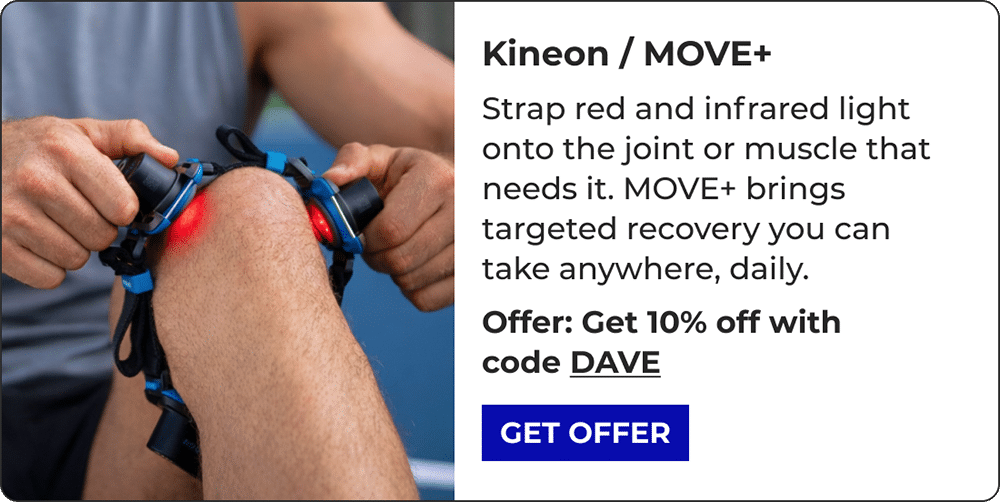
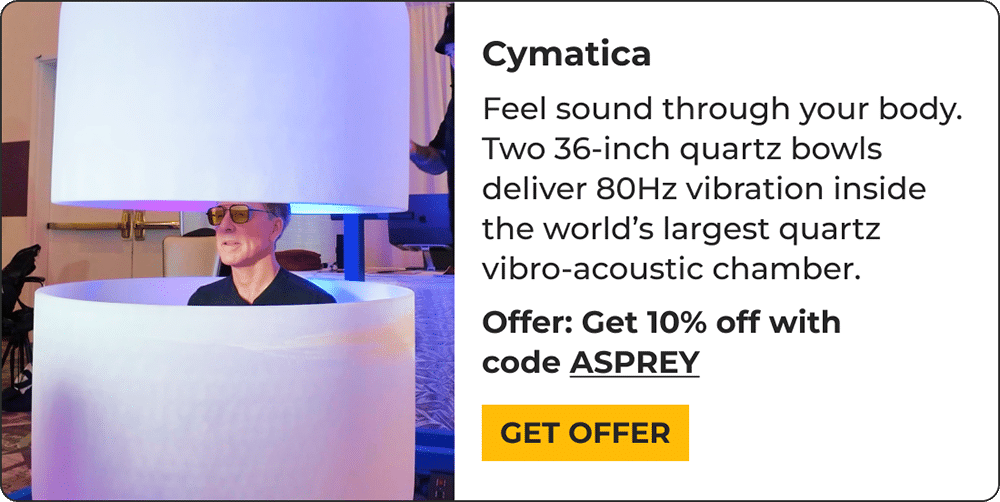
This month, you’ll find light you can strap onto a sore joint, a chamber that lets you feel sound through your whole body, a way to monitor the air in your home, and a few upgrades for your kitchen and training. Here’s what caught my attention. 

— Dave 

Want even more? Check out my full roundup of vetted products at www.daveasprey.com/recommendation

August 2026: Dave’s Favorite Products

Hey Biohacker, 

Late summer is when I take inventory. 

Summer can throw you off your game in a big way. You travel more, sleep differently, eat differently, and by the time fall hits, you’re just trying to get back to where you were in May. 

Getting back on track doesn’t have to take long. 

This month, I pulled together some of the tools and products I’m using across peptides, skin, gut health, longevity, nutrition, and performance, along with some of the best offers available on them right now. 

You don’t need all of them. Find the weak link in your biology and start there. 

— Dave 

Want even more? Check out my full roundup of vetted products at www.daveasprey.com/recommendation

Here’s What Microplastics Are Doing to Your Biology

Researchers have found microplastics in human blood, in breast milk, and in testicular tissue. The average person ingests roughly a credit card’s worth of plastic every single week, and it’s just getting worse.  

This is not a fear email. I don’t do fear. This is an email to give you the tools you need. Once you understand a little bit about microplastics, the fixes become pretty clear, and most of them are not that hard. 

What They’re Doing to Your Biology 

Your Hormones 

Most plastics leach chemicals, including phthalates and BPA and its replacements. BPA-free doesn’t always mean safe. These molecules are structurally similar enough to your hormones that your receptors cannot tell the difference. They bind to estrogen receptors, throw off hormonal signaling broadly, and interfere with the balance your body works hard to maintain. In men, they concentrate in testicular tissue and suppress testosterone while disrupting sperm production. In women, the pattern looks like estrogen dominance, disrupted cycles, and thyroid interference.  

Your Mitochondria 

Microplastics interfere with mitochondrial membrane integrity, generate oxidative stress directly inside the cell, and disrupt the electron transport chain, which is the core machinery your cells use to produce ATP (your body’s energy currency). Less efficient mitochondria means less energy, more inflammation, and faster aging. 

Your Gut 

Microplastics accumulate in your gut, alter your microbiome toward more inflammatory bacterial strains, and degrade your intestinal lining. This leads to leaky gut and sets off a system-wide inflammatory cascade that touches immune function, mood, metabolism, and autoimmunity. The gut is where most of your plastic load lands first, and it is also the most addressable place to intervene. 

Where You’re Getting Exposed 

  • Tap water is one of the highest-volume sources. Municipal filtration does not remove microplastic particles. 
  • Indoor air tends to surprise people. Synthetic carpets, furniture, insulation, and HVAC systems shed plastic particles continuously. When you run a dryer full of synthetic clothing, you are also venting microplastics into your home.  
  • Plastic food packaging and plastic water bottles are significant daily exposure points. Heat and time both accelerate how much plastic migrates into food and water. 
  • Non-stick cookware is one you have complete control over. As the coating on conventional non-stick pans scratches and degrades, it sheds plastic particles directly into your food while you cook. 
  • Plastic cutting boards are doing the same thing. Every time you cut on a plastic board, you are adding particles to your meal.  
  • Tea bags are often made with plastic mesh. Steeping them in boiling water releases microplastics directly into your cup, which add up if you drink tea regularly.  
  • Synthetic fabrics shed microplastics during wear and during washing. Most people are in synthetic clothing for the majority of the day and sleeping on synthetic bedding at night. 
  • Sea salt and seafood are two common sources. Ocean-sourced foods carry a real microplastic load, because our oceans are saturated with them at this point. 
  • Personal care products including some cosmetics and body washes still contain synthetic polymers that absorb through your skin. 

What You Can Do About It 

Filter your water first. This is the single most important change you can make. I use AquaTru, a countertop reverse osmosis system that removes microplastics along with a long list of other contaminants that pass right through standard filters. If you do nothing else on this list, do this one. 

Filter your air. Airborne microplastics are a real and underreported exposure pathway. AirDoctor uses an UltraHEPA filter that captures particles down to 0.003 microns, well below the size range of airborne microplastics. 

Change what you cook in. Look for cookware made without PFAS, like what I use from Our Place. They offer a variety of non-toxic pots, pans, and appliances. Stainless steel is also a solid option. 

Replace your plastic cutting boards. This is a high-impact swap that can really reduce your daily exposure. Titanium is the best alternative since there are zero microplastics. And unlike wood, it’s non-porous so there’s no mold risk.  

Use a stainless steel or glass water bottle. If you are still carrying a plastic water bottle, you are drinking a meaningful amount of plastic every day. 

Switch your tea bags. Look for brands that don’t use plastic or just use loose leaf. Pique is the tea brand I use and trust, and their packaging is plastic-free, which is especially important when hot water is involved. 

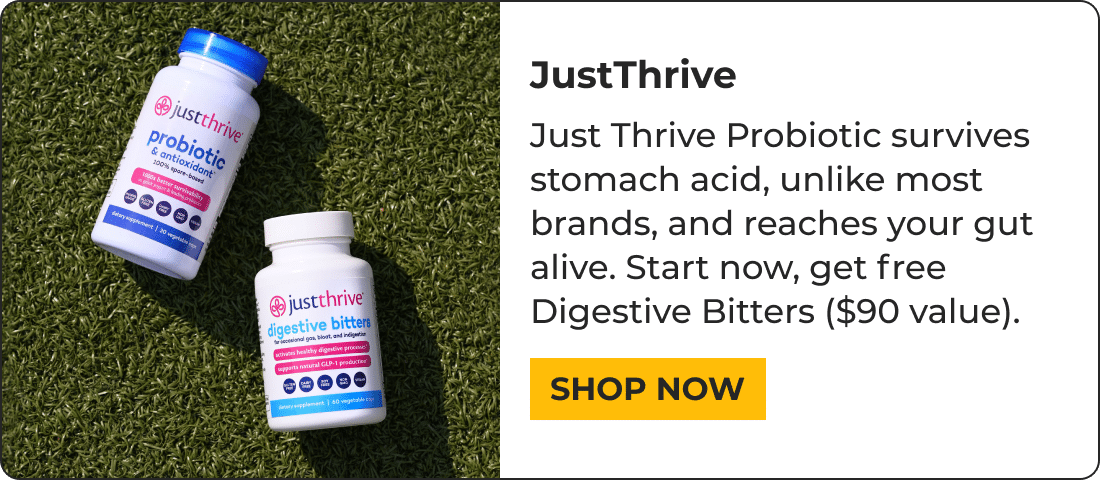
Repair the gut barrier. You cannot undo what you have already absorbed, but you can support the system that’s managing it. For intestinal lining support, I use BodyBio Butyrate. Butyrate is a natural compound your gut bacteria make (if you’re healthy). It’s the primary energy source for colonocytes (the cells lining your large intestine). Many people don’t make enough on their own and supplementing can make a huge difference. On the microbiome side, Just Thrive Probiotic is one of the few spore-based probiotics that actually survives the journey to your gut intact, where it produces antioxidants directly in the digestive tract and supports microbial diversity in a way most probiotics simply cannot. 

Look at what you are wearing and sleeping on. Synthetic fabrics shed microplastics continuously, and most people are in them all day and all night. Switching to natural fibers like 100% cotton, wool, and linen, particularly for clothing and bedding, removes a source of chronic exposure that compounds over years.  Check out AYA for microplastic free clothing and Essentia for non-toxic sheets and bedding. Use code DAVE at Essentia.com.  

Choose clean seafood. Studies show wild-caught chinook salmon is the best variety for the lowest microplastic exposure. You can also source it from a brand that tests for microplastics. I use a seafood delivery service called Seatopia. Everything is lab-tested to be omega-rich, mercury-safe, and free from detectable microplastics.  

Switch your salt As for salt, I use Oryx Desert Salt, which is harvested from an underground brine aquifer in the Kalahari Desert, completely removed from ocean contamination. They also use glass bottles with ceramic grinder heads, so you are not grinding plastic particles into your food along with the salt. 

The Short Version 

  • Water: AquaTru, and carry a stainless steel or glass bottle 
  • Tea: Pique or loose leaf 
  • Fabrics: Aya for clothes, Essentia for sheets and bedding 

Total elimination isn’t the goal. Meaningful reduction is. And that’s completely within reach. You can substantially reduce your ongoing load and meaningfully support the biological systems that are bearing the weight of it. 

Stay Upgraded, 

Dave 

Fibermaxxing: The fiber advice making you inflamed (and what to do instead) 

Fibermaxxing is everywhere right now. And most of the advice will wreck your gut before it helps it. 

Here’s the typical advice you’ll see: eat more oats, whole wheat bread, and high-fiber cereals. These are actually some of worst things you can eat if you want a healthy microbiome. 

Wheat and gluten-containing grains punch holes in your gut lining. Gluten triggers intestinal permeability (aka leaky gut) in nearly everyone, not just people with celiac. Oats are not the safe alternative most people assume. They contain avenin, a protein structurally similar to gluten that produces the same gut irritation response. Conventional oats also carry a glyphosate problem.

The Environmental Working Group found glyphosate in all but two of 45 samples of conventional oat-based foods. To make matters worse, both wheat and oats give you a hefty dose of phytic acid, an anti-nutrient that strips minerals from your cells, and lectins, which adhere to your gut wall and block repair. The result is an inflamed gut. And your gut health determines everything, so when your gut is inflamed, so is everything else.  

Grains aren’t the only problem. Most people trying to eat more fiber reach for packaged ‘high fiber’ products next. The problem is that isolated fiber additives like inulin and chicory extract cause significant bloating and GI distress for a lot of people, especially at the doses in these products.  

Fiber source matters as much as the amount.  

Here is what fiber actually does when you get the right kind: 

Fermentable fiber reaches your colon intact. Your microbiome eats it and produces short-chain fatty acids, specifically butyrate. 

Butyrate does the real work: 

  • Seals your gut lining (less permeability, less systemic inflammation) 
  • Crosses the blood-brain barrier and fuels neurons 
  • Tells your immune system to dial back chronic inflammation 
  • Supports mitochondrial function in gut cells 

Fiber is mitochondrial support in disguise. 

Most people get about 15g of fiber a day. Meaningful butyrate production needs 25-38g minimum. That g ap shows up as brain fog, low energy, and immune dysfunction.  

How to close the gap: 

Start with real food from clean sources. Resistant starch drives butyrate production. 

White rice cooked with coconut oil and cooled overnight converts a significant portion of its starch into resistant starch. Plantains work too. These are low-toxin, and your microbiome actually knows what to do with them. 

MASA Chips are a convenient snack option that provides resistant starch. Yes, I know what I usually say about corn. Conventional corn is bad because pesticide use drives fungal mutations that put mycotoxins directly into the plant. MASA uses non-GMO heirloom corn with no pesticides, and the nixtamalization process further reduces antinutrient load. 

If you want to move your fiber numbers more deliberately without building meals around starchy sides, Zbiotics makes a product called Sugar-to-Fiber. It’s the world’s first probiotic that’s designed to turn sugar into fiber inside your gut. It converts a small amount of the sugar you eat every day into levan, a rare prebiotic fiber your gut loves but is nearly impossible to get from Western foods. Use code DAVE10. 

The environment has to work too. 

Fiber is only as good as the microbiome fermenting it. Depleted gut bacteria means slow fermentation and low butyrate output. Most probiotics die in stomach acid before reaching your colon, which is where fermentation happens. Spore organisms survive the trip. Just Thrive is my favorite spore-based probiotic. Code ASPREY gets you a discount. 

You can also skip straight to the output. 

Even with solid fiber intake and a healthy microbiome, butyrate production takes time to scale. There is a shorter path. 

BodyBio Butyrate skips the fermentation step and puts the endproduct straight to work. You get gut lining integrity, brain energy, and inflammation reduction. Code DAVE15 gives you 15% off your purchase.  

Order of operations: ditch the inflammatory fiber sources, eat fermentable fiber from clean sources, build the microbial environment that ferments it well, and supplement butyrate directly for extra support.  

This is how you do fibermaxxing the right way.  

July 2026: Dave’s Favorite Products

Hey Biohacker, 

Every cell in your body is listening. 

The food you eat, the light you see, the quality of your sleep, the stress you carry, and the signals in your environment all shape how you feel and how you age. 

This month’s favorites are tools that help steer those signals in a better direction. I’ve used them myself, and they’ve earned a place on this list. 

— Dave 

Want even more? Check out my full roundup of vetted products at www.daveasprey.com/recommendation

7 reasons you’re aging faster than you should be

Hey, it’s Dave. 

The calendar says I’m in my 50s. My lab tests say otherwise. I’ve reversed my biological age by over 20 years, and people constantly ask me how I did it.  

The honest answer is I don’t share my full stack because what works for my biology won’t necessarily work for yours. But there are core interventions that work for human biology in general, and those I’ll talk about all day. I’ve spent over two decades and more than $2 million figuring out which ones actually work (and which don’t). Here’s where I’d start.

In order to address aging, you have to understand the underlying mechanisms.

Here are 7 core processes that contribute to aging:

  1. You accumulate senescent cells. As your cells accumulate damage, some of them stop functioning but refuse to die. These zombie cells release inflammatory signals that speed up damage in the surrounding tissue. The more you accumulate, the faster everything downstream degrades.
  2. Autophagy slows down. Your body has a built-in cellular cleanup system that breaks down damaged proteins and organelles and recycles them. As you age, this slows down.
  3. Your mitochondria decline. Your mitochondria produce the energy your cells run on. As you age, damaged mitochondria accumulate and a process called mitophagy, which clears out the dysfunctional ones to make room for new ones, slows significantly. This shows up as lower energy, slower recovery, and accelerated cellular aging.
  4. NAD+ levels drop. NAD+ is the coenzyme your cells need for energy production, DNA repair, and sirtuin activation. Sirtuins are the proteins that regulate cellular health and longevity. NAD+ levels drop by roughly 50% between your 20s and 50s, and the cellular processes that depend on it slow down accordingly.
  5. Stem cells become exhausted. Your body repairs itself through stem cells that circulate in your bloodstream, detect damage signals, and migrate into tissue that needs repair. With age, both the number of circulating stem cells and their ability to reach damaged tissue decline significantly, so damage accumulates faster than your body can address it.
  6. You start inflammaging. Chronic low-grade inflammation is one of the main drivers of accelerated aging. It disrupts immune function, damages tissue, and creates a feedback loop that compounds over time. A lot of people are walking around with significant systemic inflammation and have no idea.
  7. Your nitric oxide levels decline. Nitric oxide is a signaling molecule that keeps blood vessels flexible and blood flowing so that oxygen and nutrients can reach every cell. Production declines by roughly 10% per decade starting in your 20s, and by the time most people hit their 50s, their vascular function is meaningfully compromised.
Good news: you can address every single one of these processes. Here’s what it looks like.

My Longevity Stack: 

Cellular cleanup and autophagy: Mimio Health
Mimio’s formulation is built around the biology of a 36-hour fast. It replicates the metabolic state your body enters during extended fasting, activating autophagy, AMPK, and sirtuin pathways without requiring you to actually fast.

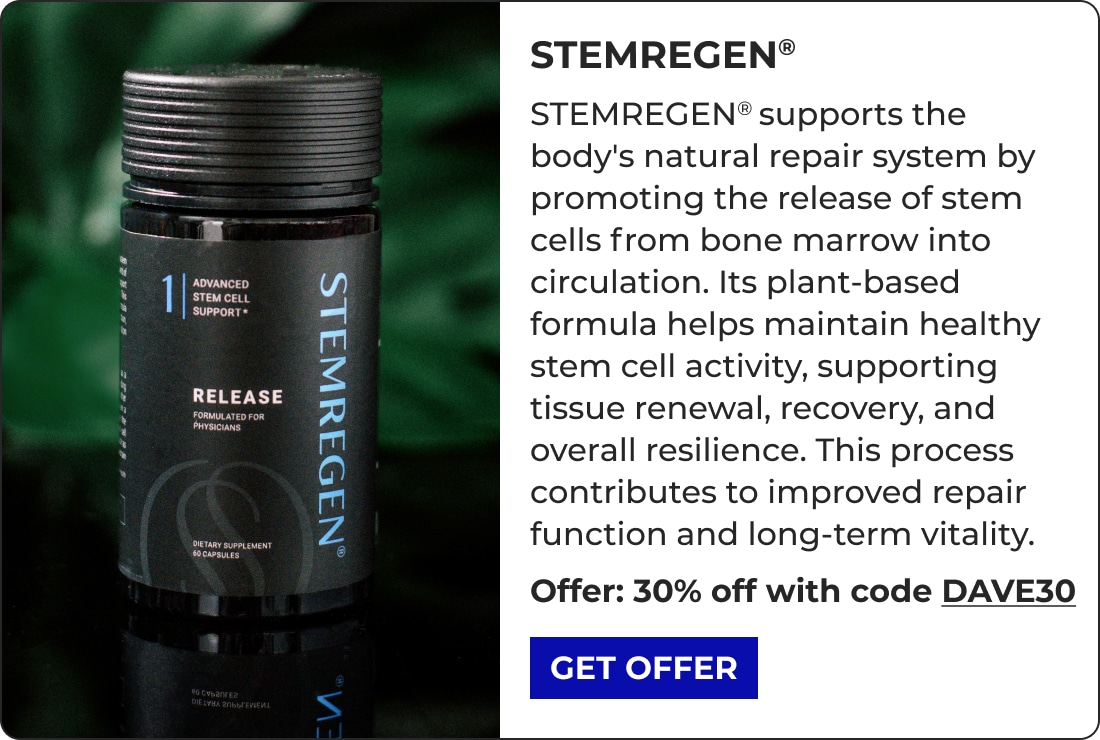
Stem cell mobilization: STEMREGEN
Stem cell scientist Christian Drapeau spent 20 years developing this formula, and two capsules put an average of 10 million of your own stem cells into circulation, roughly doubling what a typical 50-year-old has in their bloodstream.

Mitochondrial renewal: Timeline / Mitopure
Mitopure delivers Urolithin A, a postbiotic compound that triggers mitophagy, the selective clearance of damaged mitochondria. Your cells replace dysfunctional mitochondria with healthy ones, and the effects show up as more energy, better muscle function, and improved recovery.

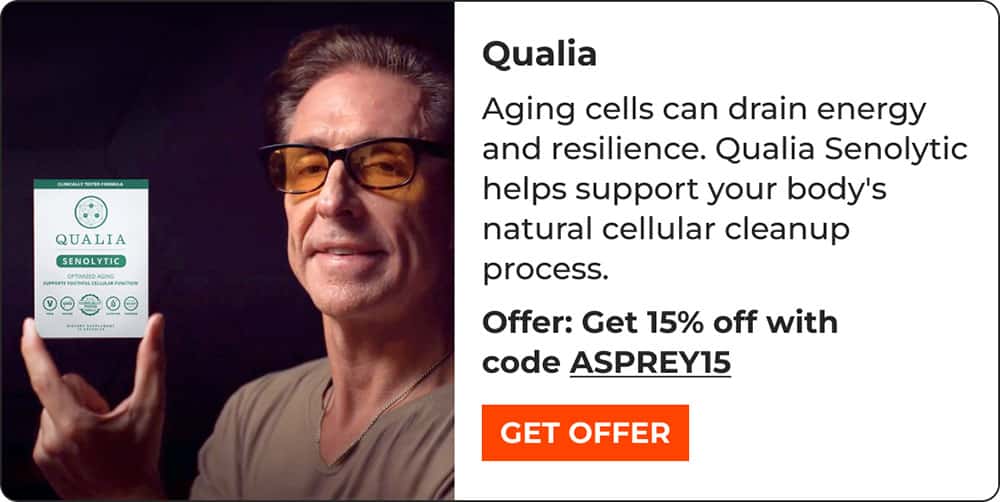
NAD+ restoration: Qualia NAD+
Qualia NAD+ uses three NAD+ precursors simultaneously: NIAGEN, a clinically studied form of nicotinamide riboside, niacinamide, and nicotinic acid. It also features resveratrol for sirtuin activation, Coffeeberry to support cellular pathways involved in NAD+ metabolism, and a full B-complex plus magnesium to provide the cofactors NAD+ synthesis depends on. In two randomized double-blind placebo-controlled trials, it raised blood NAD+ levels by roughly 70% on average. Most NAD+ products pick one precursor and stop there. This formula targets multiple steps in the production and recycling pathway at once.

Inflammation: LYMA Laser
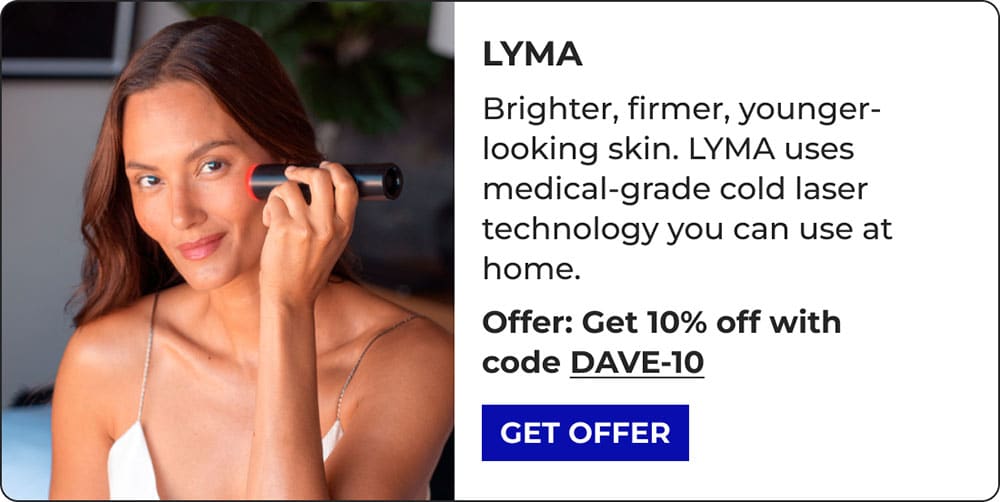
The LYMA Laser delivers coherent near-infrared laser light deep into skin tissue, triggering mitochondrial stimulation and reducing inflammation at the cellular level. Peer-reviewed research published in the Aesthetic Surgery Journal showed it activated 45 longevity genes in the skin. It’s one of the only clinic-grade laser devices you can use at home.

Nitric oxide and vascular health: N101
N101 is a nitric oxide lozenge developed by Dr. Nathan Bryan, one of the leading researchers in nitric oxide biology. It dissolves in your mouth to support nitric oxide production directly in your blood vessel walls, improving circulation, oxygen delivery to cells, and vascular flexibility.

Biological age testing: Generation Lab
Nothing on this list matters if you don’t know your baseline. Generation Lab runs comprehensive biological age testing that looks at DNA methylation patterns, immune aging markers, and organ-level function. This tells you where you actually are, not where you assume you are, and gives you a real way to measure whether what you’re doing is working.

You don’t have to do all of this at once. Start with testing so you know where you are right now, pick the mechanism that feels most relevant to what you’re experiencing, and build from there.

The goal is to be measurably younger next year than you are today.

Stay upgraded,

Dave  

June 2026: Dave’s Favorite Products

Hey Biohacker, 

Every cell in your body is listening. 

The food you eat, the light you see, the quality of your sleep, the stress you carry, and the signals in your environment all shape how you feel and how you age. 

This month’s favorites are tools that help steer those signals in a better direction. I’ve used them myself, and they’ve earned a place on this list. 

— Dave 

Want even more? Check out my full roundup of vetted products at www.daveasprey.com/recommendation

May 2026: Dave’s Favorite Products

Hey Biohacker, 

Each month I curate my favorite breakthrough tools and biohacks specifically for you. I personally use and fully trust every product on this list to deliver results. 

May was the month I got obsessed with the basics. Nervous system resets, the biomechanics hiding in your shoes, and the nutrition fundamentals most people think they’ve already nailed. 

Here’s to living longer, feeling better, and performing at your best. 

— Dave 

Want even more? Check out my full roundup of vetted products at www.daveasprey.com/recommendation

April 2026: Dave’s Favorite Products

Hey Biohacker,

Each month, I cut through the noise to bring you the tools I actually use: the ones that deliver real results. 

This April, I went deep on hormones, mitochondria, and the hidden signals your biology is sending that most people never learn to read. Every product below earned its place in my stack for a reason. 

Use them to go further, feel better, and upgrade every system in your body. 

Here’s to living longer, feeling better, and performing at your best. 

-Dave Asprey 

Want even more? Check out my full roundup of vetted products at www.daveasprey.com/recommendation

March 2026: Dave’s Favorite Products

Hey Biohacker,

This month, we’re doubling down on the fundamentals: circulation, cellular strength, mitochondrial energy, and a nervous system that stays resilient under pressure. 

Everything below is something I use and stand behind. The tools that upgrade how you feel and perform, so you have more energy to lead, build, and live like it matters. 

Here’s to living longer, feeling better, and performing at your best. 

-Dave Asprey 

Want even more? Check out my full roundup of vetted products at www.daveasprey.com/recommendation

February 2026: Dave’s Favorite Products

Hey Biohacker, This month, we’re doubling down on the fundamentals: circulation, cellular strength, mitochondrial energy, and a nervous system that stays resilient under pressure.  Everything below is something I use and stand behind. The tools that upgrade how you feel and perform, so you have more energy to lead, build, and live like it matters.  Here’s to living longer, feeling better, and performing at your best.  -Dave Asprey

Want even more? Check out my full roundup of vetted products at www.daveasprey.com/recommendation

Start hacking your way to better than standard performance and results.

Receive weekly biohacking tips and tech by becoming a Dave Asprey insider.

By sharing your email, you agree to our Terms of Service and Privacy Policy